

ennui for me
a playlist for noontide demons

I’m going to tell you an embarrassingly true story about the time I cried in a fancy fitness studio. I had been feeling ambivalent about work and listless about nearly everything else and I reckoned I could wrestle my ennui into submission with 45 minutes of indoor cycling. I threw my entire body into it. I sweated through the instructor’s mediocre pop playlist and as my mood lightened, I started feeling smug. I had easily gained the upper hand on my annoying emotions and although my bike was stationary, I pedaled as if on a victory lap.
The smugness didn’t last. The instructor placed a hand over her heart and gazed at us solemnly from her little platform. “I wanna play you a song that really inspires me,” she said, and the familiar opening notes of “You Gotta Be” by Des'ree filled the room. I rolled my eyes but something snapped inside of me as the chorus kicked in. Without warning, I started crying. First, a trickle, then a deluge of tears and sweat and snot poured down my cheeks as I wheezed through the final hill. I was defeated by ennui and Des’ree.
This incident was on my mind recently because, once again, I’ve found myself trapped in an endless ennui. The past few weeks have crept by with an uneasy tedium. I’ve got a destructive desire for chaos, just to break the monotony. I’ve experimented with small salves to push the ennui back into a dark corner. I’ve run fancy bubble baths. I’ve seen friends. I had a massage. As I underdressed and climbed onto the table, I worried my ennui was only a scab over darker emotions and the skilled hands of the masseuse would knead them to the surface and I’d be left sobbing into that weird hole you put your face in.
I did not cry at the masseuse. I’m not as embittered as I was in that cycling class but I’m still mildly ennuied. Don't worry, though. It’s more Henri than a full blown existential crisis.
I’ve been procrastinating on writing this post because I've been daunted by the task of describing ennui. I was slowly starting to chip away at it until I read the following quote from Richard Scholar’s Émigrés, a detailed study of French words that have been adopted into English vocabulary:
Writing creatively about ennui never happens at a safe distance, it seems, for the experience always threatens to creep over the writing and drain it of activity
Damnit, Richard! I transcribed the above quote into my notebook and cursed the author. How do you create a playlist around an emotion that creeps and drains?
Maybe it’s best to start with a definition. Ennui is derived from the old French word for “annoyance.” In its earliest usages, ennui involved both minor inconveniences and existential dread. That fluid definition suits ennui’s slippery nature. As Reinhard Kuhn describes it in The Demon of Noontide, “The very complexity of the concept defies the restrictive framework of a formula.” It encompasses a multitude of other emotions: melancholy, nostalgia, depression, anxiety, and of course, boredom.
Boredom can be equally as hard to pin down. There is simple boredom. This is the way one feels suffering through a long meeting or dull conversation. More pertinent to this week’s topic, however, is complex or existential boredom. This is a boredom without anything to anchor to that stretches endlessly into the horizon. As Scholar writes on the connection between ennui and this kind of boredom, “Ennui not only conveys a wider and deeper truth than boredom can by itself, we might say, but raises that truth to the level of art.”
Boredom didn’t enter popularized language until 1852 when Charles Dickens wrote it into Bleak House, but the emotions of boredom and ennui are much older. The ancient Roman Seneca wrote about a physical nausea arising from a listless state. Early Christians wrung their hands over the concept of acedia, or a boredom with prayer and spirituality. A Catholic monk, Evagrius Ponticus (345-399 AD), included the concept of acedia as one of many thought demons that could afflict spiritual practitioners. He personified the feeling as the noonday devil. The Demon of Noontide
What songs would an ennui demon listen to? I picture him, headphones on, listening to music while kicking pebbles down the sidewalk. I don’t think he’d listen to a particularly miserable playlist, though. Ennui might be a small step away from sorrow, but for me, ennui is more lovelorn, more melodramatic, and more wistful than entrenched in despair. My girl Dusty kicks this week’s playlist off and sets the tone. There’s a lot of old songs on this week’s list mixed in with some new. Ennui enjoys a vintage track. It's what I like to listen to while wallowing, too. And no, I did not include Des’ree. This is a playlist for mild ennui, not a soundtrack to my most embarrassing moments.
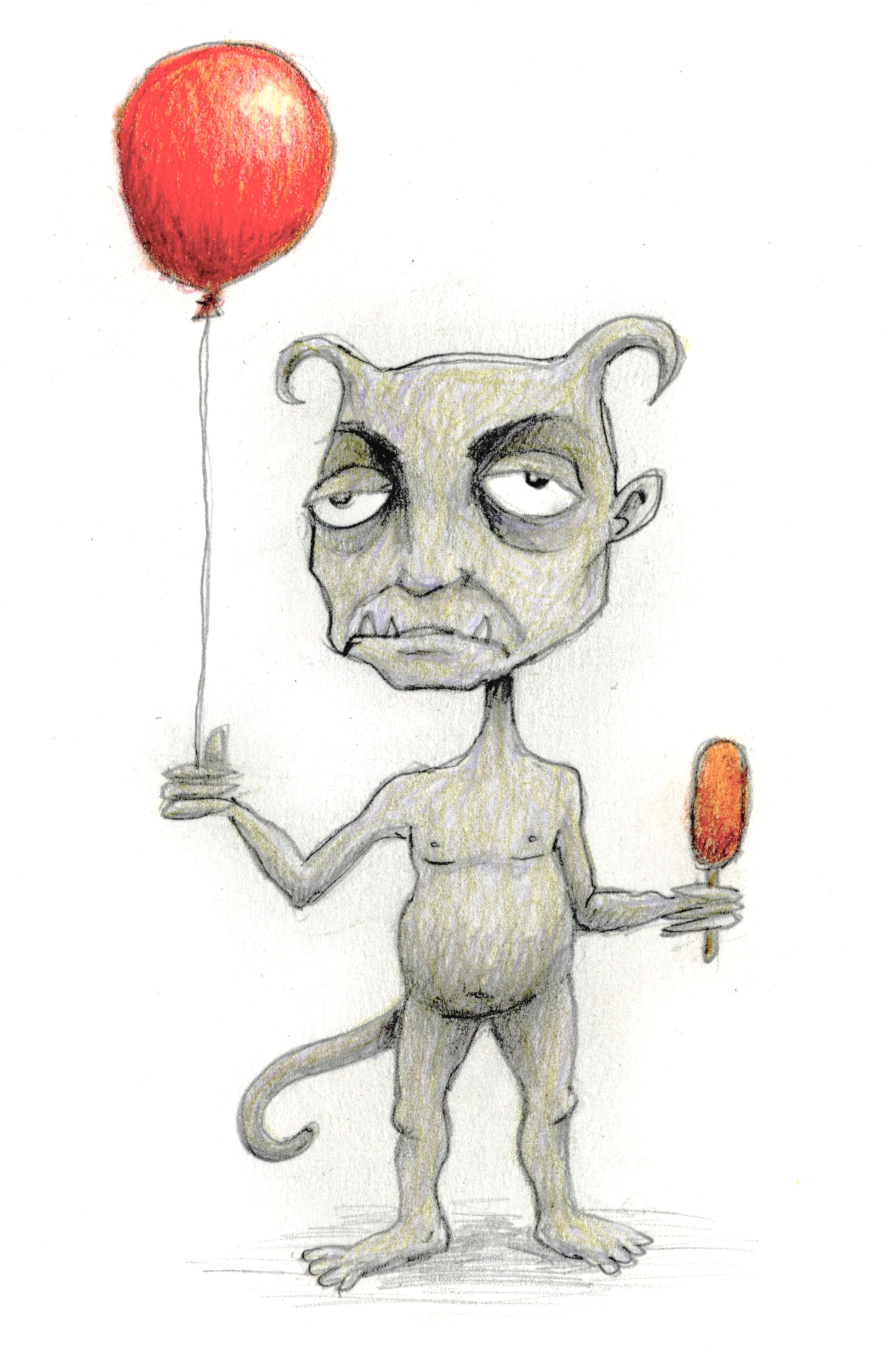
Oddly, envisioning ennui as a strange little demon brings me comfort. I imagine him trailing me with little goblin feet scratching up my floors as his fingers cling to my ankles. I don’t mean to downplay the real harm such a demon can cause. I can easily remember a time in my life when he was a poor houseguest. He handed out spare copies of my keys to all the worst emotions and those uninvited guests worked with tidy efficiency - turning happiness into a pulp and dulling colors to grayscale. At other times he’s acted like a skilled banjo player plucking at my nerves and making my stomach flip and twist and my chest twinge with panic.
It’s no wonder that throughout history, people have taken great pains to overcome their ennui demons. In the eighteenth-century, ennui was seen as a problem of the wealthy with too much free time and not enough work to busy their idle hands. As Majro Kaartinen describes in “Killing Time: Ennui in Eighteenth Century Culture,” ennui was to be banished from one's life. “Avoidance was a question of life and death: ennui could lead to moral collapse and ultimately to suicide, killing not only the body but also the soul.”
Who wouldn’t want to rid themselves of such a menace? There were tonics, cure-alls, rest cures, and prescriptions for salt air and diversions. I recently corresponded with a Kentucky physician who stumbled upon a research project I abandoned a decade ago that documented the history of hospitals and clinics in Lexington. He reached out because he collects medical artifacts and when I asked if he had anything related to malaise, ennui, and the sort, he sent me this:

A turn of the century mystery tonic for regenerating your frazzled nerves. A spoonful four times a day was all you needed to get your mind back on track.
Next week, I’ll try to soothe the noonday demon with a different kind of medicine. I’m taking my ennui demon to the Indiana State Fair. I’ll slather his scales with sunscreen and shove a corndog into his greedy little claws. Maybe he’ll scamper away while I’m admiring an artistic arrangement of corn or he’ll slip out of my sight while I’m admiring blue ribbon pigs, but if I’m honest, I want him to slink back to me, sun drunk and sated. He’ll wrap his little arms around my legs and nap in the backseat all the way back to Kentucky.
I’ve grown fond, maternal even, of my ennui demon. He may be an existential nuisance but he’s my existential nuisance.

When he’s on his best behavior and not encouraging emotional breakdowns in cycling class, he’s pretty okay. He begs me to wallow around in songs and stories. He’s the impetus for my wildest, most meandering daydreams. Since he’s always bored, he’s constantly yelping for new distractions. He patters around, stomping on my toes, until I pick up something new. Once presented with a trinket, he clings to it like a troll with a gemstone. He’s as restless as me. I’ll pour him a glass of bourbon and watch it dribble down his chin as he gleefully gulps it. I’ll let him splash around at my feet in the bubble bath I drew to banish him. I’ll strap headphones to his ears and play him melancholy songs until - hopefully - he’s lulled asleep and gently snoring on my lap.
a small bibliography for dorks like me
Kaartinen, Marjo. “Killing Time. Ennui in Eighteenth-Century English Culture.” Journal of Early Modern Studies 6 (2017): 133.
Kuhn, Reinhard. “Introduction.” In The Demon of Noontide. Princeton University Press, 2017.
Scholar, Richard. Émigrés. Princeton University Press, 2020.
Scott-Macnab, David. “The Many Faces of the Noonday Demon.” Journal of Early Christian History 8, no. 1 (2018): 22–42.
Toohey, Peter. Boredom : A Lively History. Yale University Press, 2011.